

Peachtree City: Why It's Called “Golf Cart City”
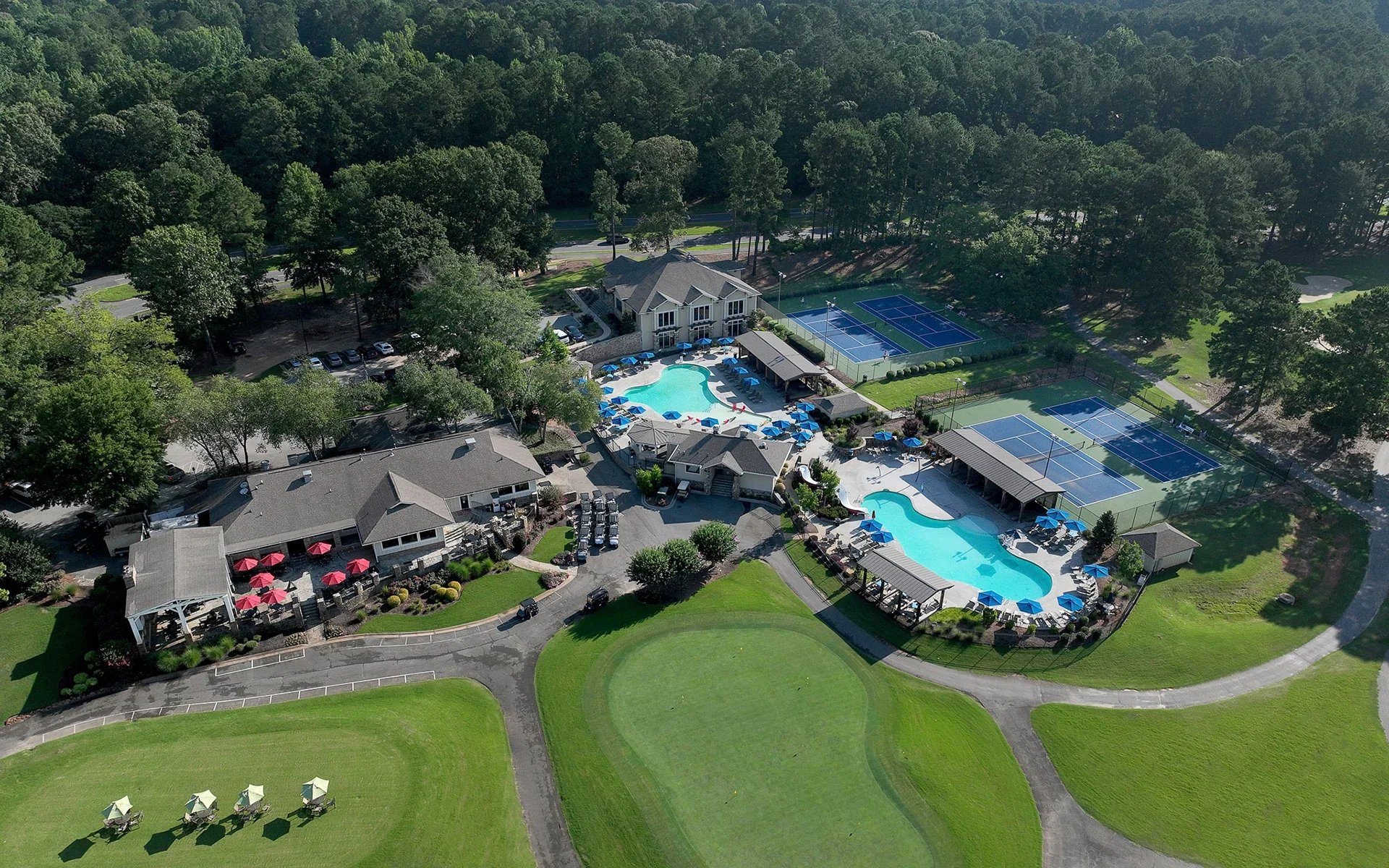
If you've spent even a few minutes researching Peachtree City, GA, you've probably noticed something unusual.
Golf carts are everywhere.
They're on the paths.
They're outside restaurants.
They're parked at shopping centers.
You'll see families riding them to parks, teenagers heading to activities, adults commuting around town, and retirees using them for everyday errands.
It's so common that people sometimes refer to Peachtree City as “Golf Cart City.” The community is also frequently described as one of America's largest and most golf-cart-friendly cities.
But why?
Why did a suburban city south of Atlanta become so closely associated with golf carts?
The answer goes back to the way Peachtree City was designed in the first place.
This wasn't a traditional suburb where residents happened to start driving golf carts.
The community's connected path system, village design, recreation planning, and later golf-cart regulations all came together to create a transportation culture unlike almost anywhere else in Georgia.
Today, the City of Peachtree City lists more than 100 miles of paved shared-use paths and approximately 11,000 registered motorized carts. The city describes the path network as a hallmark of the community, connecting neighborhoods with shopping centers, schools, parks, recreation facilities, and lakes.
If you're considering moving to Peachtree City, here's the story behind the city's famous golf-cart lifestyle—and what it means for people looking at Peachtree City GA homes for sale.
It Started With a Different Idea of Suburban Living
To understand the golf carts, you have to understand Peachtree City's origins.
Peachtree City was officially chartered in 1959 after developers assembled thousands of acres in Fayette County with the goal of creating a planned community.
Rather than simply building streets and filling them with houses, the original vision organized the city around interconnected villages.
The city's history page identifies the current villages as:
Aberdeen
Braelinn
Glenloch
Kedron
Wilksmoor
The original concept included nearby shopping, recreation, and elementary schools within the individual villages.
That planning philosophy is important because it created the foundation for something that would eventually become much bigger than a recreational amenity.
It created a city where many everyday destinations could be connected without requiring a traditional car trip.
Where Did the Golf Carts Come From?
Golf carts weren't originally intended to become the primary symbol of Peachtree City.
The story evolved naturally.
Peachtree City developed golf courses and recreational amenities, including the Flat Creek Golf Club.
According to Visit Peachtree City, the community's path network was extended soon after the city's founding after members of the new golf club wanted to use their golf carts to travel to the course.
The idea proved practical.
If a golf cart could travel from a neighborhood to a golf course, why couldn't the same type of vehicle travel to other nearby destinations?
As the city expanded, so did the paths.
The paths began connecting more neighborhoods, shopping areas, schools, parks, and recreational destinations.
What started as a practical solution for golfers gradually became part of the city's transportation infrastructure.
The Path System Changed Everything
The most important reason Peachtree City became “Golf Cart City” isn't actually the golf carts.
It's the path system.
The City of Peachtree City currently describes its network as more than 100 miles of shared-use paths.
Those paths are designed for:
Pedestrians
Cyclists
Motorized carts
Other permitted users
And they connect much more than golf courses.
The city says residents can use the paths to travel between neighborhoods, shopping centers, schools, recreation centers, medical and office areas, and lakes.
That's what makes the Peachtree City system different.
In many suburbs, a golf cart is primarily a recreational vehicle.
In Peachtree City, the paths give it a practical transportation network.
Golf Carts Became Part of Everyday Transportation
Once the paths connected more destinations, residents had a reason to use their carts for things beyond golf.
Today, a Peachtree City resident might use a golf cart to:
Pick up dinner
Visit a friend
Go to a park
Travel to a community event
Visit a shopping center
Get to a recreation facility
Take children to activities
Ride to the golf course
Connect with other parts of the city
The city's transportation information specifically describes the 100-plus-mile path system as an alternative to automobiles, including trips to the grocery store, school, and parks.
That's a major reason the golf cart became part of everyday life.
The 1970s Made Golf-Cart Use More Practical
As golf-cart use grew, the city needed rules governing how these vehicles could operate.
Historical sources document that Peachtree City began adopting golf-cart ordinances in the early 1970s.
In 1974, Georgia legislation allowed golf carts to operate on Peachtree City's streets under the local framework, helping establish the legal foundation for the city's unusual transportation system.
That was an important moment.
The city already had paths.
Residents already owned carts.
Golf-cart use was already becoming popular.
Now the legal framework could evolve alongside the infrastructure.
Over the following decades, Peachtree City continued developing regulations covering carts, paths, registration, safety, and where carts could operate.
Bridges and Tunnels Helped Make the System Work
Here's another reason Peachtree City's golf-cart network became so successful.
The city didn't simply paint a line on the side of a road and tell people to drive golf carts.
The path system was designed to connect communities while reducing conflicts with automobile traffic.
Historical accounts describe the construction of bridges and tunnels that allowed golf-cart users and pedestrians to cross major roads without interacting directly with vehicle traffic.
A 1974 golf-cart bridge over Highway 54 became an early example of this approach.
Today, bridges and underpasses are an important part of the experience.
They help make the network feel like a transportation system rather than simply a collection of recreational trails.
That's Why Peachtree City Feels Different
Imagine two suburbs.
Suburb A
You leave your driveway in a car.
You drive to school.
You drive to work.
You drive to lunch.
You drive to the grocery store.
You drive to the park.
You drive home.
Peachtree City
Depending on where you live and where you're going, some of those trips can happen on the city's path system.
You might take a golf cart to:
School
Shopping
Dinner
Recreation
A friend's house
A community event
That's a completely different relationship with transportation.
And it's one of the biggest reasons people searching for best areas to live in Peachtree City GA pay attention to path connectivity.
How Many Golf Carts Are in Peachtree City?
The City of Peachtree City currently reports approximately 11,000 registered motorized carts.
That's a remarkable number for a city with a 2020 Census population of 38,244.
The city's FAQ also describes Peachtree City as having more than 100 miles of shared-use paths and more than 10,000 golf carts.
That gives you an idea of how deeply golf-cart transportation is woven into the community.
It's not unusual.
It's not niche.
It's part of the city's identity.
The Golf Cart Is Part of the Peachtree City Culture
Ask a resident about golf carts and you'll quickly realize that they aren't necessarily talking about golf.
The cart can become:
A second vehicle
A family transportation option
A social vehicle
A way to get outdoors
A way for teenagers to gain independence
A convenient way to run short errands
And there is also a social component.
People see their neighbors on the paths.
They stop and talk.
Families ride together.
Children grow up knowing the path network.
Golf carts become part of how people experience their community.
It's Not Just About Golf
The name “Golf Cart City” can make it sound like the community revolves around golf.
It doesn't.
Golf is certainly part of Peachtree City's history and recreational culture, but today's golf-cart lifestyle extends far beyond the golf course.
The paths connect residents to:
Schools
Shopping
Restaurants
Parks
Lakes
Recreation
Neighborhoods
Offices
Medical facilities
The golf cart is simply the vehicle that fits the network.
Why Families Love the Golf-Cart Lifestyle
For families, the lifestyle can provide an unusual combination of convenience and independence.
Older children and teenagers may eventually be able to travel independently to:
Friends' homes
Parks
Sports activities
Restaurants
Shopping
Community events
Parents don't necessarily have to make every short-distance trip by car.
That doesn't mean every family uses golf carts the same way.
But for many families, the ability to make local trips without a traditional vehicle is one of the biggest reasons they are interested in Peachtree City GA homes for sale.
Why Retirees Like Golf Cart Living
Golf carts aren't just popular with families.
The lifestyle can also appeal to retirees and active adults.
The City of Peachtree City specifically promotes the community as a retirement destination, highlighting its 100-plus miles of paths, recreation, golf, lakes, shopping, dining, and events.
For retirees, a golf cart can provide a simple way to:
Get outdoors
Reach restaurants
Visit friends
Attend events
Explore parks
Stay active
It becomes transportation and recreation at the same time.
What Are the Current Golf-Cart Rules?
The rules have evolved significantly over the decades.
Today, Peachtree City requires motorized carts to be registered.
For 2026, the city lists a three-year resident renewal totaling $45, with current registration decals required on both the front and rear of the cart. New carts must be registered within 10 days of purchase.
The city also has specific rules governing:
Path use
Cart equipment
Registration
Operating requirements
Safety
Low-speed vehicles
Age and licensing requirements
Low-speed vehicles are permitted on the city's shared-use paths under specific conditions, including registration, insurance, a maximum 20-mph speed, and an amber strobe light.
Because regulations can change, anyone buying a cart should review the current City of Peachtree City rules before operating one.
What Does a Golf Cart Cost to Own?
The purchase price is only one part of the equation.
Potential golf-cart expenses include:
Purchase price
Registration
Insurance
Maintenance
Tires
Batteries for electric carts
Charging equipment
Accessories
Storage
Some homeowners purchase a basic used cart.
Others invest in customized carts with:
Rear-facing seats
Enclosures
Upgraded suspension
Lighting
Storage
Bluetooth audio
Custom wheels
The right setup depends on how frequently you plan to use it.
Does Every Peachtree City Home Have Golf-Cart Access?
No.
This is one of the most important things for homebuyers to understand.
Living in Peachtree City does not automatically mean every house has identical golf-cart connectivity.
When shopping for Peachtree City homes for sale, consider:
Distance to the nearest path
Path connectivity
Whether the route crosses major roads
Access to shopping
Access to schools
Access to parks
Golf-cart parking
Garage space
Two homes in the same city can offer very different golf-cart experiences.
Path Connectivity Should Be Part of Your Home Search
If golf-cart living is important to you, don't just ask:
“Does this neighborhood have a golf-cart path?”
Ask:
“Where does the path take me?”
That second question is much more important.
A path near your home may connect directly to:
A shopping center
A school
A park
A restaurant district
Another village
Or it may require a more complicated route.
The city's current path system maps and the NavigatePTC app can help residents understand the network and plan routes.
Golf Cart Living and Peachtree City's Villages
The city's village structure is another reason golf-cart transportation works so well.
Peachtree City was designed around villages that incorporated shopping, recreation, and schools.
Today, the city identifies:
Aberdeen
Braelinn
Glenloch
Kedron
Wilksmoor
as its villages.
The golf-cart paths help connect these areas.
For homebuyers, that means you can evaluate neighborhoods not only by the house but by how the village and path network fit your daily routine.
Golf Carts Change the Meaning of “Nearby”
In a traditional suburb, “nearby” often means a five-minute car ride.
In Peachtree City, “nearby” might mean:
a 10-minute golf-cart ride.
That's a major lifestyle difference.
A restaurant that would otherwise require starting the car becomes part of your local neighborhood experience.
A trip to the park becomes a recreational ride.
Going to a friend's house can become an outdoor activity.
The distance hasn't changed.
The way you experience it has.
Why the Golf-Cart Lifestyle Appeals to Buyers Moving From Atlanta
Many buyers relocating from Atlanta or other Metro Atlanta communities are attracted to Peachtree City because they want:
Less daily driving
More outdoor recreation
Family-friendly neighborhoods
Strong schools
More space
A planned community
A distinctive lifestyle
The golf cart is part of that package.
It doesn't eliminate cars.
Most households still own traditional vehicles.
But it can reduce the number of short local trips that require one.
Can You Live in Peachtree City Without a Car?
This is one of the most common questions from people researching the community.
The practical answer is:
You can potentially reduce your reliance on a car significantly, but most households still need a traditional vehicle for longer trips.
Golf carts are excellent for local transportation.
They aren't a replacement for driving to:
Downtown Atlanta
The airport
Long-distance destinations
Regional medical appointments
Out-of-town shopping
Interstate travel
Think of the golf cart as a local transportation tool rather than a complete replacement for a car.
Why Golf Cart Paths Are Also About Recreation
One of the reasons the system works so well is that the paths aren't simply transportation corridors.
They're also recreational spaces.
Residents use them for:
Walking
Jogging
Cycling
Running
Golf carts
Family rides
The City of Peachtree City describes the system as a shared-use network for pedestrians, cyclists, and motorized carts.
So even when you're not trying to get somewhere, the path itself can become part of the experience.
Golf Cart Culture Is Part of the City's Identity
There are many master-planned communities in the United States.
There are also many cities with golf courses.
And there are plenty of communities with walking trails.
Peachtree City combined all three ideas into something distinctive.
The result is a city where golf carts became part of the local identity.
That's why you will see them:
At restaurants
At shopping centers
Near schools
Outside parks
Around lakes
At community events
In residential neighborhoods
The golf cart isn't an occasional novelty.
It's part of how the city works.
Why Peachtree City Is Sometimes Called “Golf Cart City”
So, why does everyone call it “Golf Cart City”?
Because the nickname captures something real.
Peachtree City has:
A planned village structure
More than 100 miles of shared-use paths
Thousands of registered motorized carts
Legal infrastructure supporting local cart use
Bridges and crossings designed around the path network
Shopping and schools connected by paths
A culture built around using carts for everyday trips
The city's own materials call the path network a hallmark of Peachtree City.
The nickname isn't simply marketing.
You can see the reason for it the moment you arrive.
Why This Matters to Real Estate Buyers
If you're searching Peachtree City GA homes for sale, the golf-cart lifestyle should influence your home search.
Don't simply ask:
How many bedrooms?
How big is the backyard?
Is the kitchen updated?
Also ask:
How will we get around the community?
A home with excellent path connectivity may provide a very different lifestyle from one that's technically in Peachtree City but less connected to the network.
That's why experienced local guidance can be valuable when comparing neighborhoods.
What Should Buyers Look For?
If golf-cart living is a priority, consider:
Path Access
How close is the home to the nearest path?
Connectivity
Where can you actually go?
Storage
Does the garage accommodate a golf cart?
Neighborhood Design
Is the community connected to shopping and recreation?
Schools
Can children access school activities through the path network?
Shopping
Can you reach groceries, restaurants, and everyday services?
HOA Rules
Are there neighborhood-specific requirements affecting golf carts or storage?
These details can have a major impact on how much you actually use your cart.
A Typical Peachtree City Golf-Cart Day
Imagine a Saturday.
You wake up and have breakfast at home.
Then you grab the golf cart.
You take the path to:
Coffee → Park → Shopping → Lunch → Lake → Home
No traffic jam.
No parking garage.
No loading everyone into the SUV five times.
That's the lifestyle that attracts many buyers to Peachtree City.
It's not about owning a golf cart because it looks fun.
It's about changing how you experience your community.
Frequently Asked Questions
Why is Peachtree City called Golf Cart City?
Because golf carts have become a major part of local transportation and culture. The city has more than 100 miles of shared-use paths and approximately 11,000 registered motorized carts.
When did Peachtree City become known for golf carts?
Golf-cart use developed alongside the city's planned path system. Historical accounts trace early path expansion to the needs of golf-cart users, with golf-cart regulations developing in the 1970s and Georgia legislation in 1974 supporting local street use.
Are golf carts actually used for transportation?
Yes. The city specifically describes its path system as an alternative to automobile travel, connecting neighborhoods with shopping, schools, parks, recreation, and other destinations.
How many golf carts are in Peachtree City?
The city currently reports approximately 11,000 registered motorized carts.
Are golf carts allowed on Peachtree City's paths?
Yes, registered motorized carts are part of the city's shared-use path system, subject to current rules and requirements.
Can visitors rent golf carts?
Golf-cart rentals are available in Peachtree City, although rental companies and availability can change. Visitors should check current local providers and city rules before riding.
Do you need a golf cart to live in Peachtree City?
No. Cars remain an important part of everyday life, particularly for trips outside the city. But many residents use golf carts extensively for local transportation.
Final Thoughts: Welcome to Golf Cart City
Peachtree City earned its reputation as “Golf Cart City” for a reason.
The story begins with a master-planned community founded in 1959.
It continues through the development of interconnected paths.
Then golf carts became increasingly useful for traveling between neighborhoods, golf courses, schools, shopping centers, parks, and other destinations.
Over time, the golf cart became much more than a recreational vehicle.
It became part of the culture.
Today, Peachtree City has more than 100 miles of shared-use paths and approximately 11,000 registered motorized carts.
That's why the first-time visitor often notices the same thing almost immediately:
There are golf carts everywhere.
And that's exactly the point.
The golf cart isn't simply something people own in Peachtree City.
For many residents, it's one of the ways they experience the city.
If you're considering moving to Peachtree City, GA, spend some time here before you buy.
Ride the paths.
Explore the villages.
Visit the restaurants.
Check out the parks.
Tour the neighborhoods.
Then ask yourself whether this is the kind of community where you want to spend your mornings, evenings, weekends, and next chapter of life.
Because in Peachtree City, the lifestyle isn't just about where your house is.
It's about how you get around once you're home.
Thinking About Moving to Peachtree City, GA?
If you're searching for Peachtree City GA homes for sale, the Tim Stout Group with eXp Realty can help you find a home that fits the golf-cart lifestyle you're looking for.
We can help you compare:
Golf-cart-friendly neighborhoods
Homes near the path system
Braelinn
Kedron
Aberdeen
Glenloch
Wilksmoor Village
Planterra Ridge
New construction
Established homes
Homes near top schools
Homes near shopping and restaurants
Current Peachtree City home prices
Peachtree City real estate market trends
Whether you're relocating from Atlanta, another state, or another part of South Metro Atlanta, local knowledge can make a major difference.
For anything real estate related in Peachtree City, Newnan, Senoia, and surrounding Fayette and Coweta County communities, trust the local real estate experts at the Tim Stout Group with eXp Realty.
