

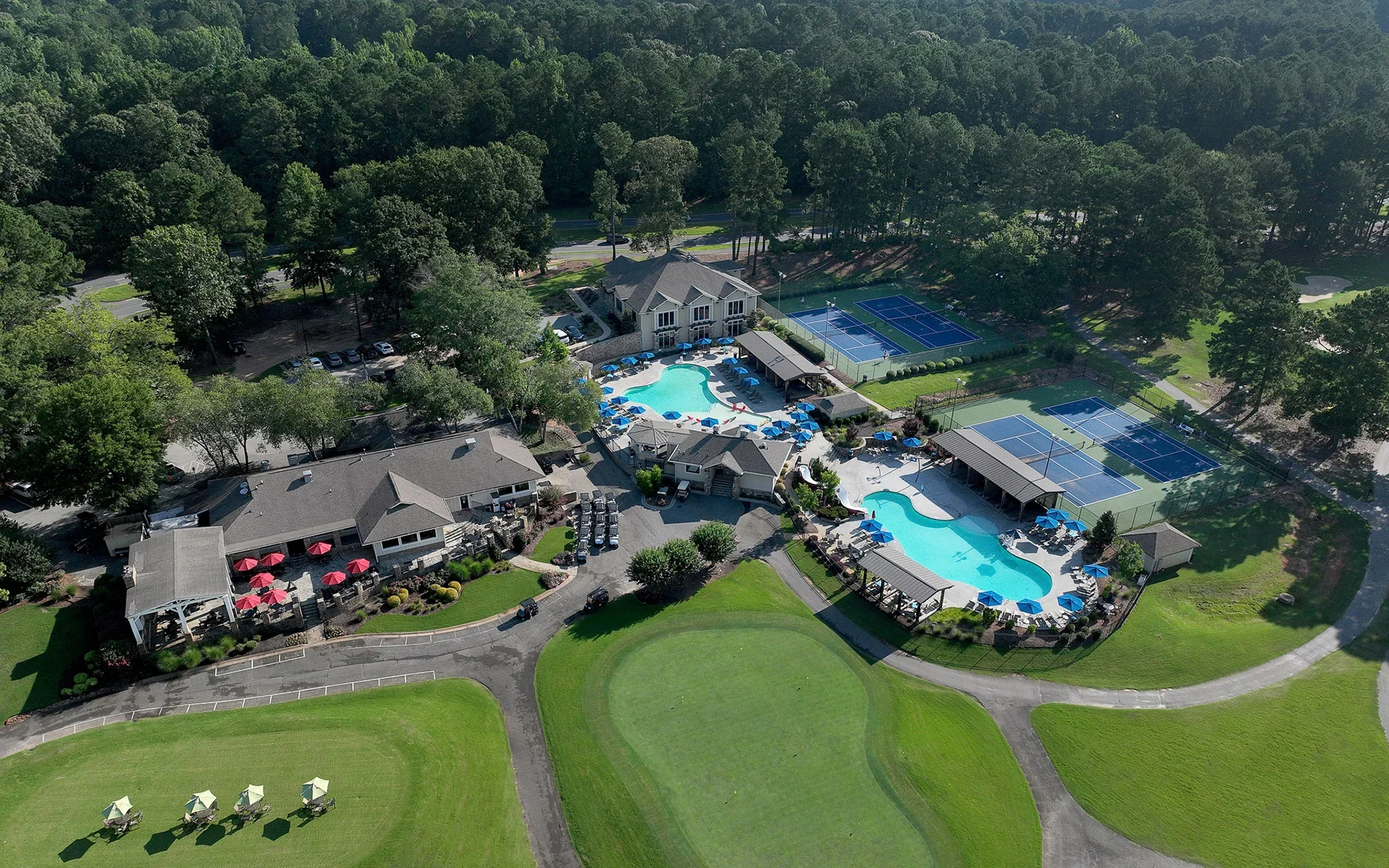
If you're researching moving to Peachtree City, GA, you've probably heard one of the city's biggest selling points:
You can get around by golf cart.
But that raises a bigger question.
Can you actually live in Peachtree City without a car?
The answer is a little more complicated than simply saying yes or no.
For many residents, car-light living is absolutely possible. Peachtree City's master-planned network includes more than 100 miles of shared-use paths connecting neighborhoods with shopping centers, schools, recreation facilities, lakes, offices, medical areas, and other destinations. The city describes the path system as a defining feature that allows residents to travel throughout the community without relying exclusively on automobiles.
The important distinction is that living without a car is much easier for local errands than for regional travel.
You may be able to take a golf cart to dinner, ride to the grocery store, visit a park, meet friends, or get to certain schools and activities. But you'll probably still want access to a traditional vehicle—or another transportation option—for trips outside Peachtree City, airport travel, medical appointments outside the area, and longer-distance commuting.
So, what does everyday life look like if you're trying to minimize car use?
Here's the real-world guide to living without a car in Peachtree City.
Why Peachtree City Is Different From Most Suburbs
Most suburban communities are designed around automobiles.
You leave your driveway, get on a major road, drive to the shopping center, park, run your errands, and drive home.
Peachtree City was planned differently.
The city was established in 1959 as a master-planned community, and its transportation design included an extensive network of paths connecting residential areas with commercial and recreational destinations. Today, the city reports approximately 100 miles of paved shared-use paths and about 11,000 registered motorized carts.
Those paths are designed for more than golf carts.
They are shared by:
Pedestrians
Cyclists
Runners
Motorized carts
Certain permitted low-speed vehicles
The result is a suburban environment where some trips that would normally require a car can instead happen on a path.
That's what makes Peachtree City car-free living so unusual.
The Golf Cart Is the Key to Car-Light Living
If you're serious about reducing your dependence on a car, a golf cart is probably going to become an important part of your transportation plan.
The city's path network connects many neighborhoods with:
Shopping centers
Restaurants
Schools
Parks
Recreation centers
Lakes
Medical and office areas
Places of worship
The city's official path information specifically describes the system as a way for residents to travel from neighborhoods to shopping centers, schools, parks, recreation centers, offices, medical parks, and lakes.
That means your golf cart isn't necessarily just a recreational toy.
For some households, it functions as a second transportation system.
You might use the car for Atlanta.
You might use the golf cart for Peachtree City.
That's the distinction that makes the lifestyle work.
Can You Grocery Shop Without a Car?
For some residents, yes.
This is where location matters enormously.
If you purchase a home with convenient path access to a shopping center, your grocery routine can look very different from a typical suburban household.
Instead of:
Car → parking lot → grocery store → car → home
you may be able to:
Golf cart → shopping center → groceries → golf cart → home
The feasibility depends on the exact neighborhood, path connections, shopping destination, weather, how much you're buying, and how much your cart can carry.
For a small or medium grocery trip, car-light living can be surprisingly practical.
For a major warehouse-club shopping trip, however, you'll probably still want a vehicle.
What About Restaurants?
This is one of the easiest areas in which to reduce car use.
Peachtree City has a large selection of restaurants, cafés, and casual dining destinations, and the city's tourism bureau specifically promotes exploring the community by golf cart. It currently describes more than 100 dining choices throughout the city.
Depending on where you live, you may be able to use the path system to reach:
Breakfast
Coffee
Lunch
Dinner
Takeout
Ice cream
Casual drinks
Weekend dining
This is particularly attractive for couples and families.
A Friday night out doesn't necessarily have to begin with everyone piling into an SUV.
Sometimes it's simply:
Golf cart → dinner → dessert → golf cart home.
Can Kids Get Around Without a Car?
This is one of the most interesting parts of Peachtree City's transportation model.
Depending on their age, school location, neighborhood, and applicable rules, children and teenagers can have more independent mobility than they might in a typical car-dependent suburb.
The path network can connect residential areas with:
Schools
Parks
Sports facilities
Friends' neighborhoods
Recreation
Shopping
That doesn't mean parents should assume every child can safely travel independently.
Parents should consider:
Age
Traffic crossings
Path conditions
Weather
Time of day
Local cart regulations
The child's experience
But the infrastructure itself creates opportunities for family transportation that are difficult to replicate in most suburbs.
Can You Get to School Without a Car?
Potentially, yes—but this depends heavily on the specific home and school assignment.
One of the biggest mistakes a homebuyer can make is assuming:
"It's in Peachtree City, so it must have easy golf-cart access to the school."
That's not necessarily true.
Before buying a home, investigate the actual path route between:
Home → School
Don't just look at straight-line distance.
You should check:
Path entrances
Road crossings
Bridges
Tunnels
Route length
School access points
Whether the route is practical for your family
The official Peachtree City path system includes an interactive map, and the city also promotes the NavigatePTC app for path navigation.
For families, path connectivity should be part of the home search—not an afterthought.
What About Parks and Recreation?
This is where living without a car becomes especially appealing.
Peachtree City's paths connect residents with an extensive network of outdoor destinations.
You can use the paths to reach:
Parks
Lakes
Walking areas
Recreation facilities
Golf courses
Tennis facilities
Pickleball
Community gathering spaces
The city and tourism bureau specifically highlight the way the path network connects residents and visitors to parks, lakes, recreation, shopping, dining, and other destinations.
That means recreation doesn't necessarily require loading the family into a car.
Your transportation can become part of the recreation itself.
Lake Peachtree Without a Car
Lake Peachtree is one of the city's most recognizable recreational features.
If you live in a neighborhood with convenient path access, visiting the lake can become part of your normal routine.
You might:
Ride your golf cart
Walk
Bike
Go fishing where permitted
Enjoy the views
Meet friends
Watch the sunset
Visit nearby parks
This is one reason buyers researching best neighborhoods in Peachtree City GA should look beyond the house itself.
Ask:
How easy is it to get from this home to the places we actually want to visit?
What About Medical Appointments?
This is where the car-free lifestyle becomes more complicated.
Some medical offices and healthcare facilities are accessible through Peachtree City's path network, but not every appointment will be.
You may eventually need to travel to:
Fayetteville
Newnan
Atlanta
Other Metro Atlanta medical centers
Those trips are much less convenient without a traditional vehicle.
If you have frequent medical appointments, this should be an important consideration before deciding that you can live completely car-free.
A car-light lifestyle may be much more realistic than a truly car-free lifestyle.
Can You Commute to Atlanta Without a Car?
This is where expectations need to be realistic.
If you work in Atlanta, Midtown, Buckhead, or another major employment center, a golf cart isn't going to replace your car for the entire commute.
Peachtree City's paths are designed primarily for local movement within the community.
The city is approximately 20 miles southwest of Atlanta, and regional travel is a different transportation challenge from getting around town.
For Atlanta commuters, you'll likely still need:
A car
A rideshare
A shuttle
Carpooling
Another regional transportation arrangement
The golf cart can reduce the number of local miles you drive, but it doesn't eliminate the need for regional transportation.
What About the Atlanta Airport?
Hartsfield-Jackson Atlanta International Airport is one of Peachtree City's major location advantages.
The city's visitor bureau describes Peachtree City as approximately 25 minutes from the airport under typical conditions, although actual travel time varies with traffic.
A golf cart obviously isn't going to be your airport transportation.
For airport trips, you'll likely use:
Your car
Rideshare
Airport shuttle
Taxi
Another private transportation service
The good news is that these trips are occasional for most households.
Your everyday transportation can still be largely car-light.
What About Public Transportation?
Peachtree City is not an urban, transit-oriented community where you can expect a dense network of buses and rail stations to replace automobile travel.
That is important for anyone moving from:
New York
Chicago
Boston
Washington, D.C.
Other transit-heavy cities
The lifestyle here is different.
Instead of replacing the car with a subway, Peachtree City replaces some local automobile trips with paths and golf carts.
That is a major distinction.
If your goal is truly zero-car living, carefully evaluate your work, healthcare, shopping, and regional transportation needs before moving.
What If You Don't Own a Golf Cart?
You can still walk and bike.
The path system is shared among multiple users, including pedestrians and cyclists.
However, your practical range will be smaller.
For some residents, that may be perfectly fine.
You might live close enough to:
Restaurants
Parks
Shops
Coffee
Community facilities
that walking or biking handles most local trips.
For others, a golf cart makes the difference between occasionally using the path system and using it every day.
Can Visitors Experience Car-Light Peachtree City?
Absolutely.
In fact, the city's tourism bureau actively encourages visitors to leave their cars at the hotel and explore by golf cart. It lists multiple local golf-cart rental providers and describes the path network as a way to reach shopping, dining, parks, lakes, and recreation.
This is actually a great idea for prospective homebuyers.
Before buying a home in Peachtree City, consider spending a weekend here.
Rent a golf cart.
Use the paths.
Visit different villages.
Go to dinner.
Visit a park.
Run an errand.
Then ask yourself:
Could I see myself using this as part of everyday life?
What Does a Car-Light Day Look Like?
Here's a realistic example.
7:30 AM — Coffee
Walk or take the golf cart to a nearby coffee shop.
9:00 AM — Work From Home
Return home and work.
Noon — Lunch
Take the golf cart to a nearby restaurant.
3:30 PM — School or Activity
Depending on the location, use the path network for a school or recreation trip.
5:30 PM — Grocery Run
Take the golf cart for a smaller grocery trip.
7:00 PM — Dinner
Meet friends at a nearby restaurant.
8:30 PM — Ride Home
Take the scenic path home.
You may have driven zero car miles that day.
That's where Peachtree City's design can make a meaningful difference.
The Biggest Limitation: Leaving Peachtree City
The moment you leave the city, the equation changes.
You may need a traditional vehicle for:
Atlanta
Newnan
Senoia
Fayetteville
The airport
Interstate travel
Regional shopping
Specialized medical appointments
Long-distance trips
This is why many Peachtree City households ultimately adopt a two-tier transportation system:
Local
Golf cart, bike, or walking.
Regional
Car, rideshare, shuttle, or another vehicle.
For many residents, that provides the best balance.
Golf Cart Rules Matter
If you're going to rely heavily on a golf cart, understand the local rules.
Peachtree City's current rules require motorized carts operated on the path system and applicable public areas to be registered. The city also requires current registration decals and has specific requirements for cart size and speed.
The city currently states that motorized carts must weigh under 1,300 pounds, be no more than 50 inches wide including wheels, and not operate above 20 mph to qualify under the applicable cart requirements.
The city also permits qualifying low-speed vehicles on shared-use paths under specific requirements, including registration, insurance, equipment, and licensed drivers.
Rules can change, so always verify current requirements before purchasing a cart.
Choosing the Right Home for a Car-Light Lifestyle
This may be the most important section for homebuyers.
You shouldn't simply search for:
"Peachtree City homes for sale."
You should search for:
"Peachtree City homes for sale with convenient path access."
Those are two very different searches.
When evaluating a home, look at:
Path Connectivity
Can you easily access the path from your neighborhood?
Shopping
Can you reach groceries and everyday stores?
Restaurants
Are dining options accessible without driving?
Schools
Can your children realistically reach school through the path system?
Recreation
Are parks, lakes, and sports facilities nearby?
Work
Can you get to your job without relying on the cart?
Regional Roads
How quickly can you get to major roads when you need the car?
This is where a knowledgeable Peachtree City GA real estate agent can add significant value.
Neighborhoods Worth Exploring
If car-light living is important to you, consider exploring areas such as:
Kedron
Kedron's northern location provides convenient access to shopping, recreation, schools, and major roads.
Braelinn
Braelinn offers established neighborhoods, shopping, recreation, and extensive path connectivity.
Aberdeen
Aberdeen provides an established village environment with access to recreation and local amenities.
Planterra Ridge
Planterra Ridge can appeal to buyers who want established homes, golf-course surroundings, and access to Peachtree City's path network.
Wilksmoor Village
For buyers interested in newer construction, Wilksmoor Village offers a different version of Peachtree City living, with modern homes in a growing area.
The exact path connectivity varies by property, so don't make a neighborhood decision based solely on the community name.
Is Living Without a Car Actually Cheaper?
Not necessarily.
A golf cart isn't free.
You'll need to consider:
Purchase price
Registration
Insurance
Charging or fuel
Maintenance
Batteries
Tires
Repairs
Storage
The city currently lists resident motorized-cart renewal fees at $45 for the 2026–2028 three-year renewal period, while non-residents using the city's path system face an additional annual path-user fee.
But using a golf cart for local trips may reduce:
Fuel consumption
Car mileage
Vehicle wear
Local parking hassles
So the financial benefit depends on how much driving you're replacing.
Is Peachtree City Truly Walkable?
It depends on what you mean by walkable.
Peachtree City isn't a traditional urban environment where every home is within a five-minute walk of a grocery store, office, restaurant, and transit station.
Instead, it is path-connected.
That distinction matters.
The city offers a network designed to connect neighborhoods and destinations, but the distances can still be substantial.
A golf cart can bridge that gap.
Walking may work for shorter trips.
Biking can extend your range.
The combination is what makes the system so effective.
The Real Answer: Car-Free or Car-Light?
For most people, car-light is the more realistic goal.
You can potentially complete a large percentage of your everyday local activities without using your car.
But completely eliminating your car becomes difficult if you:
Work outside Peachtree City
Travel frequently
Have regular appointments outside the city
Have children with regional activities
Frequently visit Atlanta
Need to transport large items
The beauty of Peachtree City isn't necessarily that you never need a car.
It's that you don't need to use one for everything.
Who Is Most Likely to Succeed Without a Car?
A nearly car-free lifestyle may work particularly well for:
Remote Workers
You can handle work from home and use the cart for local errands.
Retirees
If most of your activities are local, a golf cart can cover a surprising amount of daily transportation.
Families Living Near Amenities
The closer your home is to schools, parks, shopping, and restaurants, the easier car-light living becomes.
Active Adults
Walkers and cyclists can combine the paths with golf-cart transportation.
Residents With Flexible Schedules
If you aren't commuting long distances every day, you have more freedom to use alternative transportation.
Final Thoughts: Can You Live Without a Car in Peachtree City?
So, can you live without a car in Peachtree City?
Yes—for some lifestyles, but car-light is more realistic than completely car-free.
Peachtree City was designed in a way that makes local transportation dramatically different from most American suburbs.
With more than 100 miles of shared-use paths connecting neighborhoods, schools, shopping, recreation, lakes, offices, and other destinations, residents can replace many short car trips with walking, biking, or golf-cart travel.
The key is choosing the right location.
A home with excellent path connectivity can make a huge difference.
A home that looks close to an amenity on a map may not be nearly as convenient if there isn't a practical path connection.
So if you're searching for Peachtree City GA homes for sale, don't just ask:
"How big is the house?"
Also ask:
"Where can I go from this house without starting my car?"
That question could completely change how you experience living in Peachtree City.
Thinking About Moving to Peachtree City, GA?
If you're searching for a home where you can embrace the Peachtree City golf cart lifestyle, reduce everyday driving, and stay close to parks, schools, restaurants, shopping, and recreation, the Tim Stout Group with eXp Realty is here to help.
We can help you compare:
Peachtree City GA homes for sale
Homes with golf-cart path access
Braelinn
Kedron
Aberdeen
Planterra Ridge
Wilksmoor Village
Family-friendly neighborhoods
Homes near top schools
New construction
Established communities
Peachtree City home prices
Current Peachtree City real estate market trends
We'll help you look beyond the house and understand how each neighborhood actually connects to the lifestyle you want.
For all your real estate needs in Peachtree City, Newnan, Senoia, and surrounding Fayette and Coweta County communities, trust the local real estate experts at the Tim Stout Group with eXp Realty.
