

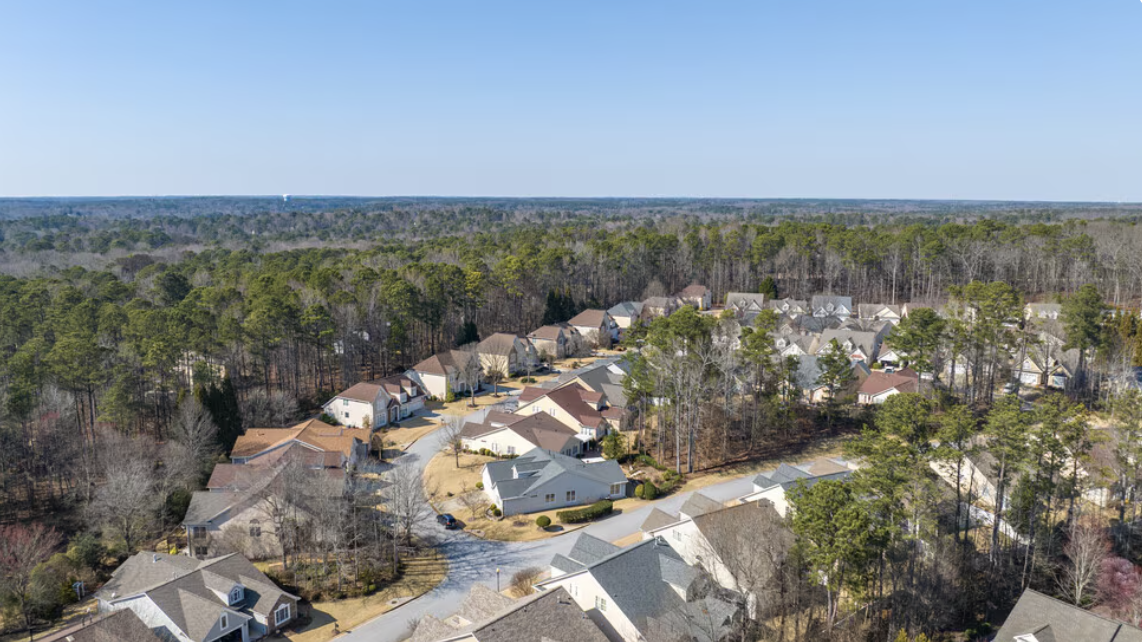
If you are comparing homes in Peachtree City, Georgia, with properties in Coweta County, one expense deserves a closer look before you make a decision: property taxes.
Many homebuyers notice that property taxes in Peachtree City can be higher than taxes on similarly priced homes in unincorporated Coweta County. The difference can affect your monthly mortgage payment, annual housing budget, and long-term cost of owning a home.
But why does this happen?
The answer comes down to several factors, including the county you live in, the local city tax rate, school district funding, fire and emergency service districts, and available homestead exemptions. Peachtree City is in Fayette County, while Newnan, Senoia, and much of the surrounding Coweta County area are subject to a different combination of tax rates.
The good news is that understanding how Georgia property taxes work can help you make a smarter real estate decision.
If you are searching for Peachtree City GA homes for sale, comparing the cost of living in Peachtree City with Coweta County, or deciding where to buy your next home, this guide explains what you should know.
The Short Answer: Why Can Peachtree City Property Taxes Be Higher?
Peachtree City property taxes can be higher than those in unincorporated Coweta County because Fayette County has a higher school tax rate, Peachtree City adds its own municipal property tax, and Fayette County has additional countywide levies.
Coweta County has a different tax structure. Its school millage rate is lower, and its countywide tax districts and municipal rates are different.
For a useful comparison, consider the latest complete official 2025 millage figures available from the Georgia Department of Revenue.
The major tax rates were:
Taxing authorityPeachtree CityUnincorporated Coweta CountyCounty general operations3.763 mills4.817 millsSchool system19.600 mills15.000 millsCity tax5.840 millsNot applicableAdditional countywide levies0.210 mills1.120 millsFire district and fire bondNot applicable in Peachtree City2.689 millsApproximate combined rate29.413 mills23.626 mills
These are 2025 comparison figures. The Peachtree City calculation includes the Fayette Countywide emergency services levy. The Coweta County unincorporated calculation includes the county fire district, fire bond, EMS, 911, and parks levies.
The comparison is important because it shows that the difference is not simply the result of a city tax.
Peachtree City has a lower county general operating rate than Coweta County in this comparison. However, its higher school millage and municipal tax result in a higher combined rate.
The actual tax bill also depends on the property's assessed value, exemptions, and applicable tax districts.
1. Peachtree City Is in Fayette County, Not Coweta County
One of the biggest misunderstandings among people moving to the southwest Atlanta area is assuming that Peachtree City and Newnan are part of the same county.
They are not.
Peachtree City is located in Fayette County, while Newnan and Senoia are in Coweta County.
That distinction matters because Georgia property taxes are made up of several different tax levies. Each county has its own county government, school system, tax rates, and service districts.
When you purchase a home in Peachtree City, your property taxes generally support:
Fayette County government services.
Fayette County public schools.
Peachtree City municipal services.
Applicable countywide emergency service levies.
When you purchase a home in unincorporated Coweta County, your tax bill generally supports:
Coweta County government services.
Coweta County public schools.
Applicable fire district and fire bond services.
Countywide emergency medical services.
Countywide 911 services.
County parks and recreation.
The specific combination depends on the property's location.
This is why buyers should never compare two homes using only the city name or ZIP code. The actual tax district and property address matter.
2. Fayette County Has a Higher School Tax Rate
One of the biggest reasons property taxes can be higher in Peachtree City is the Fayette County school millage rate.
For tax year 2025, Fayette County's school operating millage rate was 19.600 mills.
Coweta County's school millage rate was 15.000 mills.
That is a difference of 4.600 mills.
Because school taxes make up a substantial portion of many Georgia property tax bills, this difference can have a meaningful effect on annual housing costs.
Why Does the School Millage Matter?
Public school systems depend on local property tax revenue, along with state funding and other revenue sources, to support operations.
School property taxes help fund expenses such as:
Teacher and staff salaries.
School operations.
Educational programs.
Building maintenance.
Technology and instructional resources.
Student services and support programs.
Fayette County and Coweta County operate separate school systems, with different budgets, property tax digests, enrollment levels, and funding requirements.
The higher Fayette County school millage contributes to the difference buyers may notice when comparing Peachtree City with Coweta County.
However, buyers should not assume that a higher school tax rate automatically means a better school experience for every student. Families should evaluate individual schools, attendance zones, academic programs, graduation rates, and extracurricular opportunities.
3. Peachtree City Has Its Own Municipal Property Tax
Another important difference is that Peachtree City collects a municipal property tax.
For 2025, Peachtree City's millage rate was 5.840 mills. The city has listed the same rate for its fiscal year 2027 budget.
This municipal tax helps fund services provided by the City of Peachtree City.
Examples of municipal services and responsibilities include:
Police protection.
Parks and recreation.
Golf cart path maintenance.
Public works.
Planning and zoning.
Code enforcement.
Community facilities.
City administration and public services.
Peachtree City has a distinctive lifestyle that includes an extensive golf cart path network, neighborhood villages, parks, recreational facilities, and community amenities.
Maintaining these services requires funding.
The city tax is added to applicable county and school taxes, which is why a home inside Peachtree City city limits can have a higher total tax rate than a home in unincorporated Coweta County.
It is important to remember that the municipal tax is only one part of the total bill. The school and county levies also contribute to the final amount.
4. Coweta County Has a Different Property Tax Structure
Coweta County's property tax structure is different from Fayette County's.
For tax year 2025, the county's unincorporated property tax rate included:
4.817 mills for county government operations.
15.000 mills for Coweta County schools.
2.500 mills for the fire district.
0.189 mills for the fire bond district.
0.402 mills for emergency medical services.
0.321 mills for 911 services.
0.397 mills for parks and recreation.
Together, those levies produced an approximate combined rate of 23.626 mills for unincorporated Coweta County.
This is lower than the approximately 29.413 mills used in the Peachtree City comparison.
However, Coweta County does not have one single property tax rate for every property.
A home inside Newnan, Senoia, Sharpsburg, Moreland, or another incorporated community may have a different combination of taxes.
For example, the 2025 municipal millage rates included:
Newnan at 3.082 mills.
Senoia at 4.726 mills.
Sharpsburg at 1.616 mills.
Some municipalities are also subject to county fire district and fire bond levies, while others are excluded. The applicable combination depends on the property location.
If you are comparing Peachtree City with Newnan or Senoia, make sure you compare the correct incorporated tax district rather than using the unincorporated Coweta County rate for every home.
5. How Much More Could You Pay in Peachtree City?
Let's look at a practical example.
Suppose you are comparing two homes, and each has a fair market value of $500,000.
Georgia generally assesses residential property at 40 percent of fair market value before applicable exemptions.
That means:
Fair market value: $500,000.
Assessed value: $200,000.
Using the 2025 combined rates:
Peachtree City
Approximate combined rate: 29.413 mills.
Estimated annual property tax before exemptions:
$5,882.60.
Unincorporated Coweta County
Approximate combined rate: 23.626 mills.
Estimated annual property tax before exemptions:
$4,725.20.
Estimated Difference
The difference is approximately $1,157.40 per year.
That works out to approximately $96 per month.
This is an illustrative comparison using the same $500,000 fair market value and 2025 millage figures. It does not include homeowner-specific exemptions or the effect of the 2026 Homeowner Tax Relief Grant.
It also does not represent a quote for a specific property. Actual bills depend on the address, taxable value, exemptions, and the rates applicable to that tax year.
For buyers comparing homes in Peachtree City and Coweta County, this example demonstrates why it is important to calculate property taxes before deciding how much home you can comfortably afford.
6. Does Peachtree City Offer Homestead Exemptions?
Yes. Homestead exemptions can make a meaningful difference in your property tax bill.
Georgia homeowners who own and occupy a property as their primary residence may qualify for a homestead exemption.
A homestead exemption reduces the taxable value used to calculate certain property taxes. The exact savings depend on the exemption, the applicable tax authority, and the homeowner's eligibility.
Peachtree City also offers a city-specific senior exemption for qualifying residents.
According to the city's published property tax information, qualifying seniors may receive an additional exemption from city property taxes, subject to age and income requirements.
Homeowners should review current eligibility rules before assuming they qualify.
Why Should You Apply for Homestead Exemption?
If you purchase a home in Peachtree City and plan to use it as your primary residence, applying for the appropriate homestead exemptions can help reduce your property tax expense.
This is especially important for first-time homebuyers who may not realize that the previous owner's tax bill does not necessarily reflect what they will owe after purchasing the property.
A seller may have an established homestead exemption, senior exemption, or other tax benefit that will not automatically transfer to the new owner.
What Is the Homestead Exemption Deadline?
Georgia's general homestead exemption deadline is April 1 for the current tax year.
Eligibility generally requires owning and occupying the property as your primary residence as of January 1.
Because local exemptions and recent tax legislation can affect eligibility and deadlines, verify current requirements with the appropriate county tax office.
For Peachtree City homeowners, the Fayette County Tax Commissioner's Office handles tax bills and homestead exemptions.
7. What Is the Homeowner Tax Relief Grant?
Georgia homeowners should also understand the Homeowner Tax Relief Grant, commonly called HTRG.
The state has provided property tax relief through credits for qualifying homestead properties. The credit is reflected on eligible property tax bills and can reduce the amount a homeowner owes.
Coweta County announced that its 2026 property tax bills include the Homeowner Tax Relief Grant credit for residential properties with an eligible homestead exemption.
This is important when comparing a Peachtree City property tax estimate with a Coweta County bill.
A millage-rate comparison does not automatically show the final amount a homeowner pays after credits and exemptions.
The availability and amount of state tax relief can change, so homeowners should review their actual tax bill and current state guidance.
When budgeting for a home, use the current tax estimate for the specific property rather than relying only on a general millage comparison.
8. Does a Higher Property Tax Bill Mean Peachtree City Is More Expensive to Live In?
Not necessarily.
Property taxes are only one part of the cost of living.
When comparing Peachtree City with Newnan, Senoia, or other Coweta County communities, you should also consider:
Home purchase price.
Homeowners insurance.
HOA fees.
Electricity and water.
Natural gas.
Internet service.
Commuting expenses.
Home maintenance.
Local amenities and recreation.
Peachtree City offers a unique residential lifestyle with golf cart paths, village shopping areas, parks, recreational facilities, and established neighborhoods.
For some buyers, these amenities are worth paying a little more in property taxes.
Other buyers may prefer Coweta County because they want a larger lot, a different home style, more options for new construction, or a lower overall housing payment.
The right decision depends on your budget and what you value most.
A home with a slightly higher property tax bill may still be the better purchase if it offers a location, floor plan, school assignment, or lifestyle that better fits your needs.
9. Are Property Taxes Higher in Peachtree City Than Newnan?
This is another common question among buyers comparing Peachtree City and Coweta County real estate.
The answer depends on whether you are comparing Newnan city limits or unincorporated Coweta County.
For 2025, the reported municipal millage rates were:
Peachtree City: 5.840 mills.
Newnan: 3.082 mills.
The school and county rates also differ between Fayette and Coweta counties.
Newnan's lower municipal millage rate is one reason its overall tax structure can be different from Peachtree City's. However, the final tax bill depends on all applicable levies and exemptions.
For buyers comparing Newnan GA homes for sale with Peachtree City GA homes for sale, it is important to evaluate the actual tax bill for each address.
Do not assume that every home in Newnan has lower taxes than every home in Peachtree City. Property values, tax districts, exemptions, and local levies can change the comparison.
10. Are Property Taxes Higher in Peachtree City Than Senoia?
Senoia is another Coweta County community that attracts buyers who want a small-town atmosphere and access to the greater Atlanta area.
For 2025, Senoia's municipal millage rate was 4.726 mills, compared with Peachtree City's 5.840 mills.
Coweta County's school millage rate was also lower than Fayette County's.
Using the 2025 figures for the three primary levies:
Taxing authorityPeachtree CitySenoiaCity or town5.8404.726County3.7634.817School system19.60015.000Combined rate29.20324.543
These totals exclude additional countywide levies that can apply to the property. They are intended to show the three primary components, not the final tax bill.
The comparison demonstrates that Senoia's lower school rate and municipal rate can produce a lower combined tax rate than Peachtree City.
However, buyers should still compare the specific home, property value, tax district, and available exemptions.
11. How Do You Find Out the Property Taxes Before Buying a Home?
If you are shopping for homes in Peachtree City, one of the smartest steps you can take is to review the property's tax history before making an offer.
Here are several things to check.
Review the Current Property Tax Bill
Ask your real estate agent or the seller for the most recent tax bill.
This gives you a starting point for understanding the property's current tax expense.
However, remember that the seller may have exemptions that will not apply to you.
Verify the Property's Assessed Value
Georgia property taxes are calculated using assessed value, not simply the purchase price.
The county tax assessor determines the property's value for tax purposes.
If the assessed value changes after a sale or reassessment, your future tax bill may also change.
Check the Applicable Tax District
A property's mailing address does not always identify every taxing authority that applies.
Confirm whether the home is inside Peachtree City city limits and which county, school, and special service districts apply.
Estimate Your Future Tax Bill
Use the county's tax information and applicable millage rates to estimate what you may owe.
If you qualify for a homestead exemption, factor that into your estimate.
Ask About Tax Appeals
If you believe your property's assessed value is too high, Georgia homeowners may have the right to appeal.
The appeal process and filing deadline are important. Review your assessment notice carefully and contact the Fayette County Board of Assessors for guidance.
12. Should You Buy a Home in Peachtree City or Coweta County?
There is no universal answer. Both areas offer excellent opportunities for different types of buyers.
Why Buyers Choose Peachtree City
Peachtree City is popular with buyers who appreciate:
Extensive golf cart paths.
Established residential villages.
Parks and recreational facilities.
Shopping and dining throughout the city.
Access to Fayette County schools.
A planned community layout.
Convenient connections to Fayetteville, Tyrone, and Interstate 85.
If these features match your lifestyle, the additional property tax expense may be worthwhile.
Why Buyers Choose Coweta County
Coweta County attracts buyers who may be looking for:
More variety in home prices.
New construction opportunities.
Larger lots and acreage.
Historic downtown communities.
Established subdivisions.
Access to Newnan, Senoia, and Sharpsburg.
Different school and tax district options.
Coweta County offers a wide range of housing choices, from townhomes and traditional subdivisions to custom homes and country properties.
The best decision is the one that balances your purchase price, taxes, monthly expenses, commute, and lifestyle.
Frequently Asked Questions About Peachtree City Property Taxes
Why are property taxes higher in Peachtree City than Coweta County?
Peachtree City is in Fayette County, which has a higher school millage rate than Coweta County. Peachtree City also collects a municipal property tax. Together with county and applicable service levies, these rates can produce a higher combined property tax rate than unincorporated Coweta County.
What is the Peachtree City property tax rate?
For tax year 2025, Peachtree City's municipal millage rate was 5.840 mills. The total property tax rate includes additional Fayette County, school, and applicable countywide levies. The city has also listed 5.840 mills for its fiscal year 2027 budget.
Is Coweta County cheaper than Fayette County for property taxes?
The 2025 unincorporated Coweta County comparison rate was approximately 23.626 mills, while the comparable Peachtree City rate was approximately 29.413 mills. Actual bills vary by location, assessed value, exemptions, and applicable tax districts.
Does Peachtree City have a homestead exemption?
Yes. Eligible homeowners may qualify for Georgia's standard homestead exemption and additional local exemptions. Peachtree City also offers a city senior exemption for qualifying residents. Check current eligibility requirements before applying.
Are property taxes based on the purchase price in Georgia?
Not directly. Georgia generally assesses residential property at 40 percent of fair market value. The taxable assessed value is then adjusted for applicable exemptions and multiplied by the relevant millage rates.
Can property taxes increase after buying a home?
Yes. A property's assessed value and applicable tax rates can change. A buyer may also receive a different tax bill than the previous owner because exemptions may change after a sale.
Are property taxes lower in Newnan than Peachtree City?
They can be, depending on the property and applicable tax districts. Newnan is in Coweta County, which has a lower school millage rate than Fayette County in the 2025 comparison. However, buyers should compare the complete tax calculation for each address.
Final Thoughts: Understanding Property Taxes Before Buying in Peachtree City
Property taxes are an important part of deciding where to buy a home, especially when comparing Peachtree City with Newnan, Senoia, and other Coweta County communities.
The primary reasons Peachtree City can have higher property taxes are its higher Fayette County school millage rate, its municipal property tax, and the combination of applicable county levies.
Coweta County has a different tax structure, and unincorporated properties may have a lower combined rate. However, properties inside Newnan, Senoia, Sharpsburg, and other municipalities can have different tax combinations.
The smartest approach is to compare the actual tax bill for each property, review available exemptions, and calculate your estimated monthly housing expense before making a purchase.
If you are considering buying or selling a home in Peachtree City, Fayette County, Newnan, Senoia, or the surrounding communities, the Tim Stout Group with eXp Realty can help you understand the local market and make an informed decision.
Whether you are searching for your first home, relocating to the area, exploring luxury properties, or preparing to sell, having knowledgeable local real estate guidance can make a difference.
Contact Tim Stout Group with eXp Realty at (678) 967-3367, visit https://fayetteandcowetahomes.com, or email tim@mybrokerage.com. When you need anything real estate related in Peachtree City and the surrounding areas, trust the local real estate experts who understand the communities and the market.
