

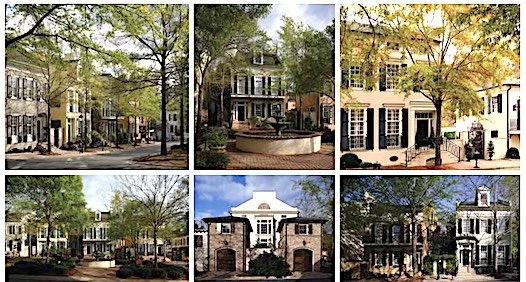
When people search for Peachtree City GA real estate, they often mention the same things:
Golf carts.
Great schools.
Beautiful neighborhoods.
Green space.
Lakes.
Shopping.
Recreation.
And the ability to get around town without always getting into a car.
Those features aren't random.
They are the result of an idea that dates back to the earliest planning for Peachtree City.
Long before Peachtree City became one of the most recognizable planned communities in Georgia, developers envisioned a city built around villages, with neighborhoods connected to shopping, schools, recreation and transportation corridors.
More than six decades later, that basic concept is still visible in the way Peachtree City works.
The city was chartered in 1959 after developers assembled more than 12,000 acres in Fayette County. The original plan called for the community to be divided into villages, each with residential neighborhoods, shopping areas, recreational facilities and elementary schools.
Today, Peachtree City has five established village areas—Aberdeen, Braelinn, Glenloch, Kedron and Wilksmoor—and more than 100 miles of shared-use paths connecting neighborhoods to shopping, schools, offices, recreation and other destinations.
That is the genius of the original plan.
It wasn't simply about building houses.
It was about building a community around the daily lives of the people who would live there.
What Was the Original Peachtree City Village Concept?
The Village Concept has been part of Peachtree City's planning philosophy since its beginnings in the late 1950s.
The city's 2022 Comprehensive Plan describes the concept as combining residential villages with Village Centers to create a vibrant community where health and social interaction are prioritized.
In simple terms, the idea was:
Live near your neighborhood.
Travel easily to nearby amenities.
Have access to schools and recreation.
Use green space and pathways as part of everyday life.
Create recognizable community centers instead of one giant, disconnected suburban landscape.
This was an innovative idea when Peachtree City was first being developed.
And it still feels surprisingly modern today.
Peachtree City Was Planned Differently From the Beginning
Many suburban communities grow incrementally.
A subdivision gets built.
Then another subdivision is added.
A shopping center eventually appears nearby.
A road is widened.
Another neighborhood is built on the next available piece of land.
Over time, the community becomes a patchwork of residential developments, commercial centers and roads.
Peachtree City took a different approach.
The community was intentionally planned.
The city says the original vision called for villages with their own shopping areas, recreational facilities and elementary schools.
That planning philosophy created a community where neighborhoods weren't supposed to function as isolated subdivisions.
They were intended to be part of a larger system.
That distinction remains one of the biggest reasons living in Peachtree City GA feels different from living in many other suburban communities around Atlanta.
The Five Villages of Peachtree City
Today, Peachtree City's village structure includes:
Aberdeen Village
Located on the city's northern side, Aberdeen represents some of Peachtree City's earlier residential development and includes neighborhoods with architectural styles dating back to the community's early years.
The city's 2017 Comprehensive Plan identifies ranch-style homes in Aberdeen as examples of one of the architectural traditions associated with Peachtree City's early development.
Braelinn Village
Braelinn is one of the city's best-known areas and includes major retail and residential destinations.
It is also associated with newer traditional-style homes and has developed into one of the city's major activity areas.
Glenloch Village
Glenloch contains another distinctive collection of Peachtree City neighborhoods.
The city's planning documents identify examples of shed-style architecture in Glenloch, reflecting the variety of residential design that developed during different periods of the city's growth.
Kedron Village
Kedron includes established residential areas and major retail activity.
The city's planning documents associate the area with examples of larger, multi-story "Millennium Mansion" style homes that became more common in later decades.
Wilksmoor Village
Wilksmoor represents another part of the city's village structure and is integrated into the broader network of neighborhoods, paths and amenities.
Together, these five villages create a community that is large enough to offer extensive amenities while still retaining a neighborhood-oriented identity.
Village Centers Are More Than Shopping Centers
One of the interesting things about Peachtree City's Village Concept is that the definition of a Village Center has evolved.
The city's 2022 planning process specifically revisited what a village center should mean in modern Peachtree City.
That discussion recognized that today's activity centers aren't necessarily identical to what planners envisioned decades ago.
Some may include:
Restaurants
Retail
Offices
Churches
Schools
Parks
Community facilities
Recreation
Services
Major transportation connections
A city planning discussion noted that modern village centers can function as hubs where activity flows outward into surrounding neighborhoods.
That is important because it demonstrates something fascinating about the original master plan:
The concept doesn't have to remain frozen in 1959 to remain successful.
The basic idea can adapt.
The Golf Cart Path System May Be the Best Example of the Village Concept Working
If you want to understand why the Peachtree City master plan still matters, look at the city's shared-use path system.
Peachtree City currently has more than 100 miles of shared-use paths for pedestrians, cyclists and motorized carts. The city describes the network as one of the features that sets Peachtree City apart from nearly every other city in the United States.
These paths connect:
Neighborhoods
Schools
Shopping centers
Restaurants
Parks
Offices
Medical facilities
Churches
Recreation areas
Lakes
That means the transportation system reinforces the Village Concept.
Instead of every daily activity requiring a car trip, many residents have another option.
And in Peachtree City, that alternative isn't theoretical.
Thousands of residents actually use it.
Golf Carts Became Part of the City's Identity
Peachtree City's golf cart culture is often treated as a quirky local attraction.
But from a planning perspective, it is much more significant.
The city's current facts and figures list approximately 11,000 registered motorized carts and roughly 100 miles of paved shared-use paths.
The city also describes its path system as a transportation alternative for residents traveling to places such as grocery stores, schools and parks.
That means golf carts aren't simply recreational vehicles.
For many residents, they are part of everyday mobility.
A child can potentially ride to a friend's neighborhood.
A family can take a cart to dinner.
A resident can use the paths for exercise.
A golfer can travel around town.
And people can reach certain shopping and recreational destinations without driving a traditional automobile.
That is a remarkable result of planning decisions made generations ago.
The Paths Connect More Than Roads
The physical path system is important, but its larger impact is social.
When people walk, cycle or ride golf carts through neighborhoods, they encounter one another.
Kids ride past neighbors.
Families walk dogs.
Cyclists pass pedestrians.
Residents meet friends at shopping centers and parks.
People become familiar with different parts of the city.
That creates something many modern communities struggle to create:
a sense of connection.
The city's 2022 Comprehensive Plan found that residents continued to strongly support the Village Concept and identified the path system, green space, recreation and community as important qualities of Peachtree City.
Why Green Space Was Built Into the Plan
Another major feature of Peachtree City GA neighborhoods is the amount of natural space woven into the community.
The city encompasses approximately 26 square miles and includes three major lakes:
Lake Peachtree
Lake Kedron
Lake McIntosh
Together, these lakes provide approximately 1,160 acres of water.
The city's planning philosophy also incorporated wooded areas, streams, wetlands and green corridors.
The result is a community that doesn't feel like one continuous field of houses.
Instead, neighborhoods are separated and connected by natural areas, waterways, roads and paths.
That is another part of the original plan that continues to influence the experience of living in Peachtree City GA.
The Original Plan Was About More Than Real Estate
From a real estate perspective, it's easy to look at the Village Concept and think:
"This is just a way to organize subdivisions."
It was more ambitious than that.
The original plan attempted to create a complete community.
Residents needed places to live.
But they also needed:
Schools
Shopping
Recreation
Churches
Parks
Transportation
Employment
Community gathering places
The village structure attempted to bring these pieces together.
That's why Peachtree City developed such a strong identity compared with many other suburban communities.
Why Families Still Love the Village Concept
For families researching Peachtree City GA homes for sale, the village system offers an important lifestyle advantage.
Imagine two communities.
In the first, a child has to be driven everywhere.
School requires a car.
Friends require a car.
Sports require a car.
Shopping requires a car.
Restaurants require a car.
In the second, many of those destinations are connected by paths.
That's a fundamentally different lifestyle.
Peachtree City doesn't eliminate driving.
Residents still use cars every day.
But the community provides an alternative that many suburbs simply don't have.
That can be especially appealing to families with children, active adults and residents who enjoy outdoor recreation.
The Village Concept and Peachtree City Schools
Schools were part of the original village concept from the beginning.
The city specifically describes the original plan as creating villages with their own elementary schools.
That doesn't mean every current neighborhood should be assumed to feed a particular school.
School attendance zones can change.
Homebuyers should always verify the current school assignment for the specific property they're considering.
But the original idea remains important:
Schools were intended to be integrated into the community rather than treated as isolated facilities disconnected from neighborhoods.
That philosophy contributes to why school access and neighborhood connectivity remain such important parts of Peachtree City real estate.
The Village Concept Helps Explain Peachtree City's Neighborhood Variety
Another interesting benefit of planned development is that Peachtree City didn't build every neighborhood at the same time.
The city grew over decades.
That means buyers can find homes reflecting different periods of American residential architecture.
The city's planning documents identify examples ranging from:
Ranch homes
Shed-style architecture
New Traditional homes
Larger Millennium Mansion-style properties
These styles can be found in different village areas and reflect the evolution of the community over time.
For homebuyers, that creates variety.
You may want an older ranch home with mature landscaping.
Or perhaps you prefer a newer two-story home.
You may want a neighborhood close to a shopping center.
Or you may prioritize a quieter street near a lake or path.
Understanding the village system can help buyers narrow their search.
Why the Master Plan Still Works in 2026
This may be the most important question.
After more than 60 years, why does this planning concept still matter?
Because it addresses problems that haven't gone away.
People still want:
Convenience.
They want to live near things they use.
Connection.
They want to feel part of a community.
Recreation.
They want access to parks, lakes and outdoor activities.
Transportation choices.
They don't want every trip to require a car.
Green space.
They want trees and natural areas.
Neighborhood identity.
They want more than rows of houses.
The technology has changed.
The retail landscape has changed.
The housing market has changed.
But those basic human needs haven't changed much.
Peachtree City Has Also Shown That Plans Can Adapt
One of the strongest arguments for the original plan isn't that Peachtree City has followed it perfectly.
It hasn't.
The city's own planning documents acknowledge that the definition of the Village Concept became less clear over time. The 2017 Comprehensive Plan noted that a large portion of the community could no longer clearly express what the Village Concept meant.
Instead of abandoning the idea, the city revisited it.
The 2022 Comprehensive Plan update specifically asked residents and stakeholders to help redefine and clarify the concept for the modern city.
That is an important lesson in urban planning.
A successful master plan isn't necessarily one that never changes.
It's one that provides a strong foundation while allowing the community to adapt.
What Today's Peachtree City Residents Say They Value
The city's 2017 Comprehensive Plan public engagement process identified several qualities residents appreciated about Peachtree City.
Among them were:
Sense of community
Family atmosphere
Abundance of green space
Golf carts
Multi-use path system
Recreational opportunities
Residents also expressed interest in completing the path system, preserving environmental quality and maintaining green space.
Those responses are significant.
They suggest that many of the things residents value most today are directly connected to decisions made decades ago.
The Village Concept and Peachtree City Real Estate
For buyers and sellers, this planning history has practical real estate implications.
When buyers search for Peachtree City GA homes for sale, they aren't necessarily searching only for square footage and bedroom counts.
They are often searching for a lifestyle.
A buyer might say:
"I want a home where my kids can ride golf carts."
Another might say:
"I want to be close to shopping."
Another might prioritize:
"I want a neighborhood near the paths."
Someone else might say:
"I want mature trees and green space."
Those aren't separate features.
They are all connected to the city's underlying planning philosophy.
Why Village Location Matters When Buying a Home
Not every Peachtree City neighborhood provides exactly the same lifestyle.
That makes understanding the village structure useful for homebuyers.
Before purchasing, consider:
How close is the home to the path system?
Not all homes have identical path access.
What amenities are nearby?
Look at shopping, restaurants, parks, recreation and services.
How easy is it to reach major roads?
Golf-cart paths are wonderful, but most residents still use automobiles.
Which schools serve the property?
Verify the current attendance zones.
What type of neighborhood is it?
Older established neighborhoods can feel very different from newer developments.
What is the surrounding development pattern?
Look beyond the property itself.
The surrounding village context matters.
Why the Village Concept Matters to Sellers
If you're thinking about selling a home in Peachtree City GA, the village concept can also be part of your marketing story.
Instead of simply saying:
"Three-bedroom home with two-car garage."
You may be able to explain the lifestyle:
Path access
Nearby shopping
Golf-cart connectivity
Village amenities
Parks
Schools
Recreation
Lake access, where applicable
Established neighborhood character
Of course, only market amenities that genuinely apply to the property.
But the broader village story can help buyers understand why location within Peachtree City matters.
Peachtree City vs. Traditional Suburban Development
One reason people researching Peachtree City GA real estate often compare it with other Atlanta suburbs is that the city feels different.
Traditional suburban development often revolves around major roads.
Peachtree City revolves around a combination of:
Roads + paths + villages + green space + activity centers.
That combination creates a layered transportation and land-use system.
The city is still accessible by major roads and highways.
But residents also have a network of paths that can provide an alternative for many local trips.
The city is approximately 20 miles southwest of Atlanta and has access to Interstates 75 and 85, along with State Routes 54 and 74. Hartsfield-Jackson Atlanta International Airport is also readily accessible.
So residents can enjoy a relatively suburban/small-city lifestyle while remaining connected to the Atlanta region.
The Future of Peachtree City's Village Concept
The biggest challenge for Peachtree City going forward isn't whether the original Village Concept was successful.
The question is:
How do you preserve what works while adapting it for a changing population?
The city continues to maintain and improve its shared-use path system. Its official path page includes current and historical master path plans, including updates from 2010, 2020 and 2022.
The city also established a Transportation Advisory Group in 2024 to provide resident input on the impacts, conflicts and benefits associated with the multi-use path system and other transportation options.
That demonstrates that the original transportation philosophy is still an active part of community planning.
The plan isn't sitting in a history book.
It's still being maintained, evaluated and adjusted.
What Makes Peachtree City Different?
Ultimately, Peachtree City's appeal isn't one single amenity.
It's the way the amenities work together.
A neighborhood connects to a path.
The path connects to a shopping center.
The shopping center connects to restaurants and services.
The paths connect neighborhoods to schools and parks.
Green space separates portions of the community.
Lakes create recreation and visual appeal.
Major roads connect Peachtree City to the greater Atlanta region.
And villages give residents a recognizable sense of place.
That's what the original planners were trying to accomplish.
And more than six decades later, the basic idea remains remarkably relevant.
Final Thoughts: The Original Peachtree City Master Plan Still Matters
When you look at modern Peachtree City GA homes for sale, it's easy to focus on the house.
But one of the most valuable features may not be inside the house at all.
It is the community around it.
The original Peachtree City Village Concept helped establish a development pattern built around neighborhoods, village centers, schools, recreation, green space and interconnected paths.
The city has changed dramatically since its 1959 incorporation.
The population has grown.
The villages have matured.
Shopping centers have evolved.
Housing styles have changed.
Technology has changed how people work, shop and communicate.
Yet residents still value many of the same qualities the original planners emphasized.
Community.
Convenience.
Green space.
Recreation.
Connectivity.
And the ability to live more of daily life close to home.
That may be the greatest proof that the original master plan worked.
It wasn't designed around a temporary trend.
It was designed around how people actually want to live.
Thinking About Buying or Selling in Peachtree City?
If you're researching Peachtree City GA homes for sale, the best neighborhoods in Peachtree City GA, golf-cart-friendly neighborhoods, homes near top schools, or the Peachtree City GA real estate market, understanding the village you're buying into can be just as important as understanding the house itself.
Tim Stout Group with eXp Realty can help you compare Peachtree City neighborhoods, understand property values, evaluate lifestyle factors and navigate your purchase or sale with confidence.
Whether you're moving to Peachtree City, relocating within Fayette County, buying your first home, upgrading, downsizing or selling an investment property, let's help you make the right move—fast, profitable, and stress-free—in Peachtree City, GA real estate.
Posted by Tim Stout — Top producing Realtor & Real Estate Investor in Peachtree City. I help families buy, sell, and navigate real estate with ease. Tim@mybrokerage.com
