

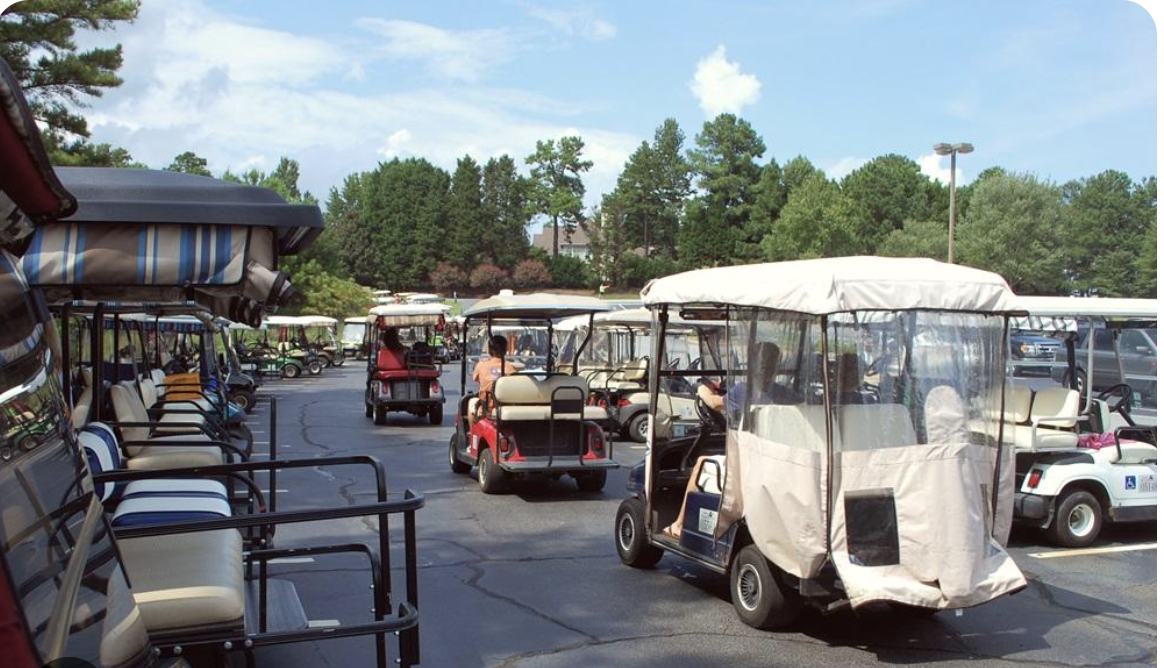
Moving to Peachtree City, Georgia, means discovering a lifestyle that is different from that of many traditional Atlanta suburbs. Here, a golf cart can be more than a vehicle for the golf course. Residents use the city's shared-use path network to reach shopping areas, parks, recreation facilities, and other destinations.
Peachtree City maintains more than 100 miles of shared-use paths, connecting neighborhoods with retail centers, schools, parks, lakes, and other community destinations. That path network is one reason golf-cart ownership is such a recognizable part of local life. City of Peachtree City path system.
But if you're new to the area, which cart should you buy? Is gas or electric better? Are lithium batteries worth the extra cost? Should you buy a new cart or a used one? And which local dealerships can help with sales, repairs, and ongoing service?
This golf cart buying guide for Peachtree City, GA, answers those questions and helps you compare the options before making a purchase.
We'll cover the main power systems, battery technologies, ownership costs, local dealers, registration requirements, and questions to ask before signing a sales agreement.
1. Why Golf Carts Are So Popular in Peachtree City
Peachtree City's golf-cart culture is closely connected to the city's planned layout and extensive shared-use path network. The paths provide a way for residents to travel between many residential areas and everyday destinations without using a car for every short trip.
Depending on where you live, a golf cart may be useful for:
Visiting friends in nearby neighborhoods.
Going to selected shopping and dining destinations.
Taking recreational rides through wooded paths.
Reaching parks and other community facilities.
Enjoying a round of golf.
Giving older teens a limited transportation option when local rules allow it.
However, not every home has the same level of golf-cart access. A house may be close to a restaurant by road but still require a longer or restricted path route. Before buying a home, check the actual path connections for the destinations you use most.
The city's shared-use path map and transportation information are useful starting points.
For people considering Peachtree City GA homes for sale, this is an important lifestyle consideration. A home's location relative to the paths, shopping centers, parks, and schools may affect how often you use a cart.
2. Gas vs. Electric Golf Carts: Which Is Better?
One of the first decisions new residents face is whether to buy a gas-powered or electric golf cart. Both can be practical, but they suit different needs.
Gas golf carts
Gas carts use a small combustion engine and need gasoline, engine oil, and routine mechanical maintenance.
Potential advantages:
Quick refueling.
Familiar engine technology.
No need to recharge a large traction battery after each outing.
Can be convenient for owners who prefer fuel-based equipment.
Potential disadvantages:
Engine noise and exhaust.
Oil changes and other engine maintenance.
More moving mechanical parts.
Fuel costs and storage considerations.
Potentially less appealing for quiet neighborhood rides.
Gas carts can be a good choice for people who prefer quick refueling, travel long distances in a day, or already have experience maintaining small engines.
However, don't assume that every gas cart is suitable for every Peachtree City path or street. The cart must meet the city's applicable requirements, and route restrictions still apply.
Electric golf carts
Electric carts use an electric motor powered by a rechargeable battery pack. Depending on the model, the battery may use traditional lead-acid chemistry or lithium-ion technology.
Potential advantages:
Quiet operation.
No gasoline or engine oil changes.
Convenient home charging when the correct electrical setup is available.
Fewer engine-related maintenance tasks.
A comfortable option for regular neighborhood trips.
Potential disadvantages:
Charging time and battery condition matter.
Battery replacement can be a major expense.
Performance and range vary with load, terrain, speed, temperature, and battery condition.
Older carts may have reduced range if their batteries are worn.
For many new residents who expect to use a cart regularly for short neighborhood trips, an electric model is an appealing starting point.
The best option depends on your habits rather than a universal rule. Think about how far you plan to travel, how many passengers you'll carry, where you can charge the cart, and how much maintenance you're willing to handle.
Gas vs. electric: quick comparison
FeatureGas golf cartElectric golf cartEnergy sourceGasolineRechargeable batteryRefueling or chargingUsually quick refuelingRequires charging timeNoiseGenerally louderGenerally quieterRoutine maintenanceEngine and mechanical servicingBattery and electrical-system checksHome setupFuel storage considerationsSuitable charging outlet and equipmentBest fitOwners who prioritize refueling convenienceOwners who prioritize quiet, frequent local trips
Buying tip: Test-drive both if you're undecided. Pay attention to acceleration, braking, turning, passenger comfort, and how the cart feels on the types of paths you'll use.
3. Lithium vs. Lead-Acid Batteries: Is Lithium Worth It?
If you choose an electric golf cart, your next major decision is battery technology.
Many traditional electric carts use lead-acid batteries. Newer models increasingly offer lithium-ion battery packs, which can cost more initially but may provide advantages in weight, charging, maintenance, and usable capacity.
Lead-acid batteries
Lead-acid batteries have long been used in electric golf carts. They can be an economical option when purchasing a lower-priced cart, especially if the batteries are relatively new and in good condition.
Potential drawbacks include:
More frequent battery maintenance on models that require watering.
Greater battery weight.
Performance changes as the battery discharges.
The need to replace the battery pack when it reaches the end of its useful life.
Potential damage if charging and maintenance instructions are not followed.
If you buy a used electric cart with lead-acid batteries, ask when the entire pack was installed, how it has been maintained, and whether the seller can provide service records.
A low purchase price may not be a bargain if the battery pack needs replacement soon.
Lithium-ion batteries
Lithium-ion golf cart batteries are increasingly popular because they can offer lower weight, useful charging characteristics, and reduced routine battery maintenance compared with traditional lead-acid systems.
Potential benefits include:
Lower battery weight.
No routine watering for typical sealed lithium-ion packs.
Consistent performance when the system is designed and maintained correctly.
Potentially longer service life, depending on the battery, usage, and operating conditions.
More convenient charging and monitoring features on some systems.
Lithium batteries still require proper care. Owners should use the charger specified or approved for their battery system, follow temperature and storage guidance, and pay attention to the battery management system and manufacturer warranty.
Also, not every lithium conversion is identical. Battery chemistry, capacity, installation quality, compatibility with the cart's controller and charger, and warranty coverage can differ.
Are lithium batteries worth the extra money?
For residents who use a golf cart frequently, a lithium model may justify a higher purchase price through convenience, reduced maintenance, and longer expected battery service life.
For occasional users with a limited budget, a well-maintained lead-acid cart may still be a reasonable choice.
Compare the total cost of ownership rather than focusing only on the advertised price.
Ask the dealer for:
Battery brand and model.
Battery capacity and estimated range under realistic conditions.
Expected service life and warranty terms.
Replacement battery cost.
Charger compatibility and replacement cost.
Whether the battery is original equipment or an aftermarket conversion.
Whether the warranty covers labor as well as parts.
Important: Do not assume every lithium battery will last a specific number of years. Actual life depends on battery design, usage, charging, temperature, storage, and maintenance.
4. New vs. Used Golf Carts: Which Should You Buy?
Your budget, expected usage, and preference for modern features will help determine whether a new or used golf cart makes more sense.
Buying a new golf cart
A new cart may be the better choice if you want current features, a manufacturer's warranty, and the opportunity to select a particular seating configuration, battery type, or accessory package.
New carts may offer:
A fresh battery pack or new powertrain.
Manufacturer warranty coverage.
Modern lighting and safety equipment.
New seating, tires, and controls.
Options for four or six passengers.
Available lithium battery systems.
The main trade-off is cost. A fully equipped new cart can become expensive once you add accessories, upgraded batteries, premium seating, a windshield, weather enclosure, or other features.
Buying a used golf cart
A used cart may help you get started for less money, but condition matters more than appearance.
Before buying, inspect:
Battery age and condition.
Charging equipment.
Tires, steering, suspension, and brakes.
Frame condition and signs of corrosion.
Lights, turn signals, horn, and other equipment.
Seat belts and passenger seating, where applicable.
Maintenance and repair history.
Registration paperwork and proof of ownership.
For a used electric cart, ask the seller to demonstrate its performance after a meaningful test ride. A cart that moves around a dealership lot may still have limited range under normal use.
Also, confirm that the cart's dimensions, weight, and maximum speed meet Peachtree City's requirements before purchasing it for path use.
What do local listings cost?
Local inventory changes frequently, but it can provide a useful starting point. At the time of research, Botero Carts' Peachtree City listing page showed used carts advertised at approximately $3,495 and $6,995, while its broader inventory included newer lithium-equipped carts at higher prices. These are advertised examples, not guaranteed current prices or a comprehensive market average.
Browse Botero Carts' Peachtree City inventory to compare current listings. Ask the dealer to confirm availability, final pricing, taxes, delivery, and any fees before making a decision.
5. Top Local Golf Cart Dealers in Peachtree City and Fayette County
One of the benefits of shopping locally is having a place to return for repairs, replacement parts, accessories, and service after your purchase.
The following businesses have published local locations or service information. This is a practical shortlist, not a ranking of dealer quality. Compare inventory, warranty coverage, customer service, and service turnaround before choosing one.
1. Golf Rider, Inc.
Best for: Buyers who want an established dealership and factory-authorized service options
Golf Rider is located at 112 Huddleston Road, Peachtree City, GA 30269. Its website lists new and used inventory, service, parts, rentals, and test-ride options.
The dealership identifies itself as a factory-authorized dealer and service provider for E-Z-GO, Cushman, Yamaha, Alset EV, and Pilot Car models.
Phone: (770) 631-0014
Website: Golf Rider
When comparing carts, ask which models are currently available in gas, lead-acid, or lithium configurations and what maintenance services are offered for each.
2. Bulldog Golf Cars
Best for: Buyers interested in Club Car carts and local service support
Bulldog Golf Cars lists a sales location at 357 Highway 74 North, Peachtree City, GA 30269, with its service location at 142 Huddleston Road.
The dealership identifies itself as an authorized Club Car dealer and offers sales, service, rentals, and repairs. Its inventory includes both new and pre-owned carts, with gas and electric models listed at different times.
Sales phone: (678) 545-0959
Service phone: (770) 487-8750
Website: Bulldog Golf Cars
Ask about battery options, warranty coverage, and whether the dealership can service a used cart purchased elsewhere.
3. Botero Carts Atlanta
<text color="secondary" size="sm">Best for: Buyers comparing new and used carts, lithium options, and custom features</text>
Botero Carts has a Peachtree City location at 1001 Moba Drive, Suite C, Peachtree City, GA 30269.
Its local website lists new and used carts, including lithium-powered models, and provides inventory information online. Buyers can compare seating layouts, styling, battery configurations, and available accessories.
Phone: (470) 585-3993
Website: Botero Carts — Peachtree City
If you are considering a lithium-powered cart, ask for the battery manufacturer's specifications, warranty, and the estimated range for the exact model you're considering.
4. GoTow Rescue & Repair
<text color="secondary" size="sm">Best for: Buyers who want to consider repairs, maintenance, and service alongside sales</text>
GoTow Rescue & Repair is a Peachtree City golf-cart business that began as a towing service and expanded into repair and sales. The company says it has operated locally since 2014 and now offers service for a range of cart types.
Its website also identifies it as a dealer for several brands, including Star, VCart, Roxie/Conquest, and Breezy Lithium.
Website: GoTow Rescue & Repair
Contact the business directly for its current address, available inventory, repair services, and pickup or delivery policies.
How to choose between dealers
Before visiting a dealership, make a short list of the features you need:
Two, four, or six passenger seats.
Gas or electric power.
Lead-acid or lithium battery.
New or used condition.
Rear-facing seats or cargo space.
Windshield and weather enclosure.
Headlights, taillights, turn signals, and other required equipment.
Warranty and service availability.
Ask each dealer to quote the same general configuration so you can make a fair comparison.
6. Peachtree City Golf Cart Registration: What New Residents Need to Know
Buying a cart is only the first step. If you plan to use it on Peachtree City's shared-use paths and other authorized public areas, you need to follow the city's registration and operating rules.
The city publishes current information on its Paths & Motorized Carts page.
Registration and decals
The city's current guidance says a newly purchased cart must be registered within 10 days of purchase. The city requires proof of ownership and identification, and the applicable registration fee depends on the owner's residency status and registration period.
For 2026, the city's posted resident renewal amount is $45 for the three-year registration period. The page also lists an additional annual path-user fee for nonresidents who do not pay Peachtree City property taxes.
The city has also updated decal-placement rules: registration decals must be displayed at both the front and rear of the cart. Check the official page for the current forms, fees, and deadlines before visiting City Hall.
Equipment and operating rules
Peachtree City's published rules include requirements for cart dimensions, weight, speed, registration, and equipment. For example, the city's registration materials state that carts must weigh under 1,300 pounds, cannot exceed 50 inches in width, and cannot operate at more than 20 mph to be eligible for registration under the city's motorized-cart rules.
Carts operating after dark must have functional headlights and taillights. The city also restricts carts from certain roads and requires operators to use cart paths where available, subject to the applicable exceptions and authorized crossings.
Review the current city traffic ordinance and the city's registration page before buying a cart for local path use.
What about low-speed vehicles?
A low-speed vehicle (LSV) is not automatically the same as a traditional golf cart. Georgia law sets separate requirements for LSVs, including speed, registration, equipment, insurance, and operator qualifications.
Peachtree City says LSVs must be registered and insured in accordance with Georgia law, tagged through the Fayette County Tag Office, operated by licensed drivers, and equipped with the locally required amber strobe light to use the city's shared paths.
The Georgia Department of Public Safety's low-speed vehicle guidance explains the state-level distinctions.
If you want a vehicle that can be used on certain public roads as well as shared-use paths, tell the dealer before purchasing. Confirm the vehicle's classification and legal requirements instead of relying on phrases such as “street ready” or “street legal” in an advertisement.
7. How Much Does It Cost to Own a Golf Cart?
The purchase price is only one part of golf-cart ownership. Your total cost depends on the vehicle, power system, usage, maintenance, accessories, and whether you use the cart regularly or occasionally.
Costs to include in your budget
Purchase price: New carts and premium lithium models can cost significantly more than older used carts.
Registration: Account for the city's applicable registration fee and any nonresident path-user fee.
Energy: Gas carts require fuel; electric carts require charging. The difference depends on how often you drive and the cart's efficiency.
Maintenance: Gas carts may need engine service, oil changes, and fuel-system maintenance. Electric carts require attention to batteries, wiring, brakes, tires, and other components.
Battery replacement: If you choose an electric cart, battery condition and eventual replacement are important budget considerations.
Accessories: Windshields, enclosures, mirrors, lights, upgraded seats, storage accessories, and other additions can increase the final price.
Insurance: Ask an insurance professional about appropriate liability coverage and whether your homeowner's or auto policy offers any applicable protection. Do not assume coverage is automatic.
Storage and charging: Consider where you'll park the cart, how you'll secure it, and whether your charging setup is suitable for the battery system.
A useful approach is to request a written estimate from the dealer that includes all mandatory charges and optional accessories. Then compare the purchase price with the likely cost of ownership over the next several years.
8. Questions to Ask Before Buying a Golf Cart
Before making a final decision, ask the seller:
Is this cart eligible for registration and use on Peachtree City's paths?
What are the cart's maximum speed, width, and weight?
Is the vehicle classified as a traditional motorized cart or an LSV?
What battery type does it use, and how old is the battery pack?
What is the estimated range under normal passenger and terrain conditions?
Which components are covered by warranty?
Is the charger included, and is it compatible with the battery?
What service and replacement parts are available locally?
Can I test-drive the cart before buying?
What are the total out-the-door costs, including taxes, fees, accessories, and delivery?
For used carts, also request available maintenance records and proof of ownership. A reputable seller should be willing to explain the vehicle's condition and help you understand the requirements for local use.
9. Should You Buy a Golf Cart Before or After Moving to Peachtree City?
If you're relocating to Peachtree City, it may be worth waiting until you know where you'll live before buying a cart.
The path network is extensive, but route convenience varies by neighborhood. A home near one shopping center may have easy access to it, while another home a short distance away by road might require a less convenient path route.
Before buying, consider:
Which destinations you expect to visit most often.
Whether your neighborhood connects to the shared-use paths.
Where you'll store and charge the cart.
Whether your household needs a two-, four-, or six-passenger model.
Whether children or other household members will use it.
Whether a traditional cart or an LSV better suits your intended use.
If you are also searching for Peachtree City GA homes for sale, ask your real estate agent about path connectivity as part of your home search. That way, your property choice and golf-cart purchase can work together rather than treating them as unrelated decisions.
Frequently Asked Questions About Golf Carts in Peachtree City
Is an electric golf cart better than a gas golf cart in Peachtree City?
For frequent short trips, many buyers prefer electric carts because they are quiet and can be charged at home. Gas carts may appeal to people who prioritize quick refueling or prefer an engine-powered vehicle. The best option depends on your usage, budget, charging setup, and maintenance preferences.
Are lithium golf cart batteries worth it?
Lithium batteries may be worth the higher initial price for frequent users who value reduced maintenance, lower weight, and charging convenience. Compare the battery warranty, replacement cost, capacity, and compatibility before deciding.
How much does a golf cart cost in Peachtree City?
Prices vary widely by age, brand, battery type, passenger capacity, and equipment. Local listings include used options at a few thousand dollars and newer lithium models at higher prices. Ask dealers for current inventory and an itemized out-the-door quote.
Do I have to register my golf cart in Peachtree City?
If you intend to operate a motorized cart on the city's shared-use paths and authorized public areas, follow the city's registration requirements. The city says new carts must be registered within 10 days of purchase. Check the official page for current forms and fees.
Can I drive a golf cart on any road in Peachtree City?
No. The city restricts carts from specified roads and requires use of the path system where available, subject to exceptions and authorized crossings. Review the current map and ordinance before choosing a route.
Where can I buy a golf cart near Peachtree City?
Local options include Golf Rider, Bulldog Golf Cars, Botero Carts Atlanta, and GoTow Rescue & Repair. Contact each business to confirm current inventory, hours, service offerings, and warranty details.
Conclusion: Find the Right Golf Cart for Your Peachtree City Lifestyle
A golf cart can make everyday life in Peachtree City more convenient and enjoyable, whether you're visiting neighbors, exploring local paths, heading to a shopping center, or spending time outdoors.
The best buying decision starts with understanding your own needs. Compare gas and electric models, evaluate lead-acid versus lithium batteries, check the vehicle's condition, and choose a dealer that can support you after the sale.
Just as importantly, verify that your cart meets Peachtree City's current registration and operating requirements. A model that looks appealing in a showroom is only the right choice if it fits your intended use and complies with local rules.
And if you're planning a move to Peachtree City, consider golf-cart access when choosing your neighborhood. The right home and the right cart can make it easier to enjoy the city's distinctive lifestyle.
For help buying or selling a home in Peachtree City and surrounding communities, trust Tim Stout Group with eXp Realty. We help buyers explore neighborhoods, understand local amenities, and find homes that fit their goals and everyday routines.
Tim Stout Group with eXp Realty
Phone: (678) 967-3367
Website: https://fayetteandcowetahomes.com
Email: tim@mybrokerage.com
